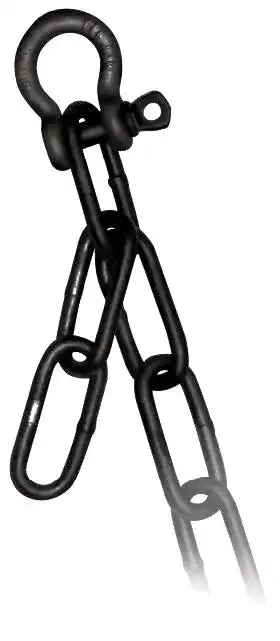
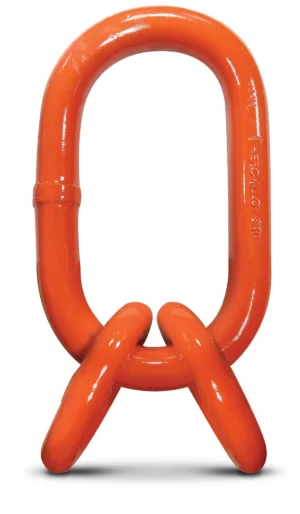
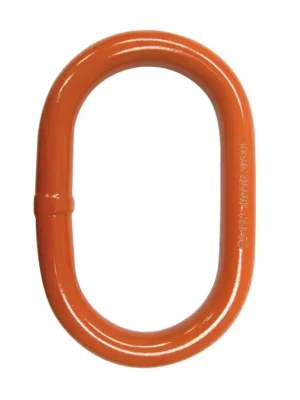
Chain and Chain Accessories
A long history of developing innovative products that have changed the material handling industry. Today, CM Herc-Alloy is now one of the most recognized and trusted brands in the rigging industry and only offered by Stuart Rush.
American Made Chain
Chain and Chain Accessories for Every Configuration.
Stuart Rush’s chain, chain assemblies and masterlinks are expertly engineered for strength, safety, and versatility—offering complete solutions tailored to your rigging needs. Designed to simplify selection and ensure reliable performance.
Filter products
Your results will change based on your selections
Use of search implies consent to our privacy policy.
Unplanned Downtime Starts With the Wrong Specification.
Get the chain and rigging accessories for your application, your environment before the order.
The Brands Your Facility Has Been Running for Decades
Backed by the same engineering standards and parts continuity your facility has relied on for years.
One manufacturer, one place to specify, source, and support all of it.
Chain FAQs
How do I identify the grade of a chain I already have?
Grade 70 transport chain is almost always identifiable by its gold/yellow finish and link stampings (“G7,” “70,” or “T”). Grade 80 and 100 lifting chains are marked with “8,” “80,” “10,” or “100” on individual links and typically come with a test certificate. Proof coil and high test chain are harder to distinguish visually — if you cannot positively identify the grade, do not use the chain for lifting or legal cargo securement. When in doubt, replace it with new, traceable, properly marked chain.

What does "proof tested" mean?
Proof testing means every length of chain leaving the factory has been subjected to a tensile load equal to a defined multiple of its WLL (typically 2x for Grades 30–70, and 2.5x for Grades 80 and 100) to verify that no links fail, crack, or deform at that load. It is a quality assurance test — not a load rating test — and does not mean the chain can be used at that proof load in service.
How do I correctly measure chain size?
Chain size refers to the nominal diameter of the steel bar used to form the links — measured at the straight section of the link, not across the weld. Always measure the wire diameter, not the link width or length. Using a vernier caliper on an unworn section of link gives the most accurate measurement.
Can chain be repaired by welding a broken link?
No. Field welding of chain links is never acceptable for load-bearing, lifting, or securing applications. The heat of welding changes the metallurgical properties of alloy or heat-treated chain unpredictably, eliminating any meaningful safety assurance. Replace damaged chain with new certified chain.
What is the correct way to store chain?
Chain should be cleaned, lightly lubricated with oil, and hung on properly rated storage hooks or racks — never left coiled on a damp floor. Lifting chain must be stored with its test certificate and inspection records. Keep different grades clearly separated to prevent misidentification and misuse.
Need Help Matching Chain and Rigging Accessories to Your Application?
A distributor familiar with your application can confirm the right solution before the order.